
Why Businesses Struggle to Adopt AI
AI did not just change productivity. It changed who gets access to intelligence, and most companies are not ready for that.

F.J. Abrahams
CCO & Principal. Leading the Changer against cognitive friction
Why Businesses Struggle to Adopt AI
AI did not just change productivity. It changed who gets access to intelligence, and most companies are not ready for that.
F.J. Abrahams
CCO & Principal. Leading the Changer against cognitive friction
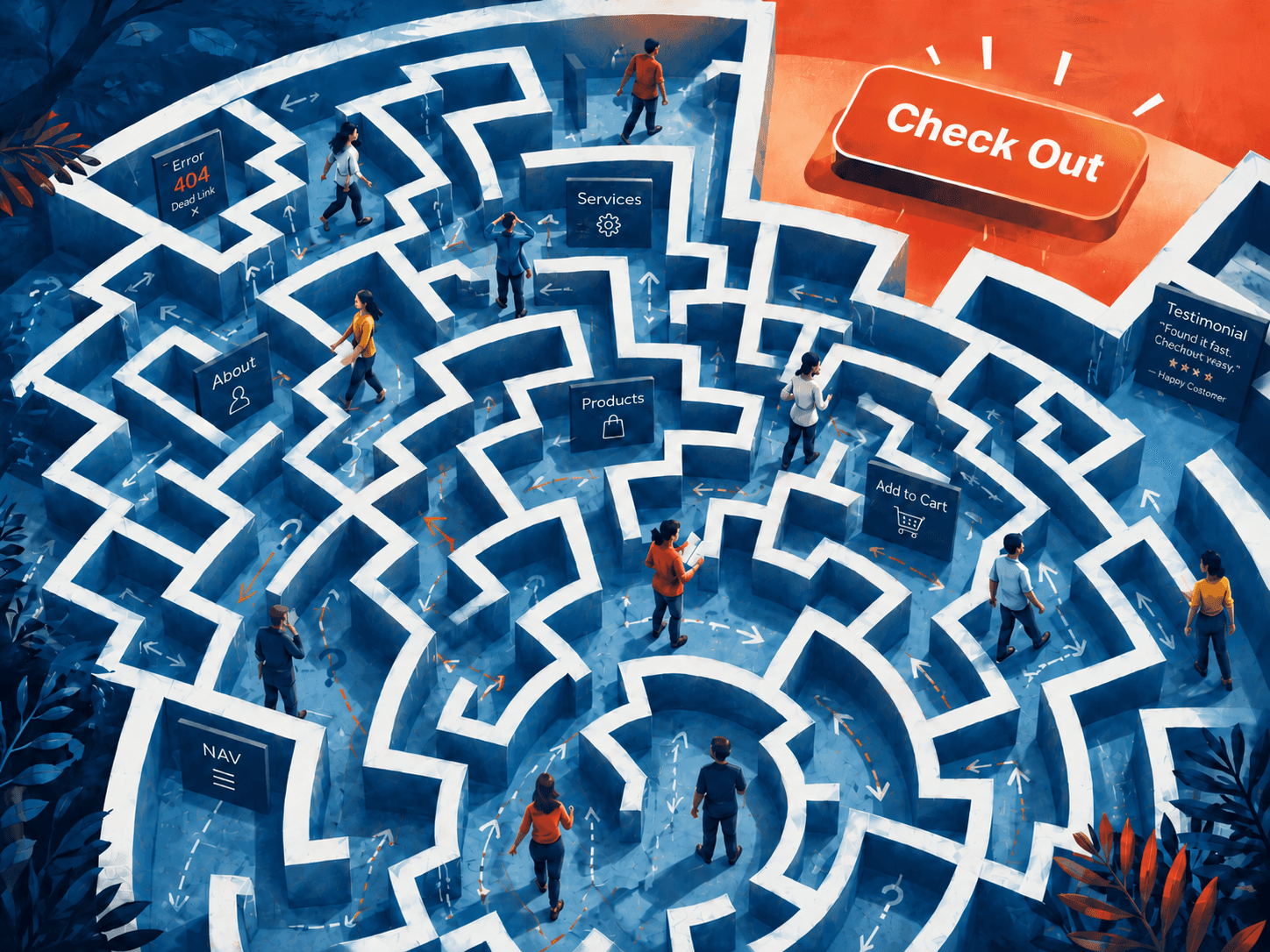
Somewhere inside a company, probably on a Tuesday, leadership announces the business is now “AI-enabled.” The post goes live. The tools are approved. Everyone claps. Then the old workflows quietly eat the future for breakfast.
The Tuesday Morning Announcement
Somewhere inside a company, probably on a Tuesday morning, someone announces that the business is now “AI-enabled.”
There is an all-hands meeting.
A senior leader appears on screen with the careful optimism of someone who has said “transformation” six times before lunch. A few slides mention productivity, innovation and growth. Someone says the company is entering “a new era.” Someone else says this will “unlock human potential.” Everyone nods because nodding is free and usually safer than asking the obvious question.
Then the LinkedIn post goes live.
Proud to announce we are embracing AI across the organization.
Thrilled to empower our teams with next-generation tools.
Excited for what this means for our customers, our people and the future of work.
You know the post. We have all seen the post.
There is a stock photo of a glowing circuit brain. Maybe a robot hand touching a human finger if the brand team had a rough week.
A few licenses get approved. A Slack channel is created. Someone shares a chatbot-generated email and says, “This is crazy.” A small group of employees starts experimenting quietly. Another group waits for permission. A third group panics in silence because the subtext of the announcement feels less like empowerment and more like a polite warning.
And then, after the applause, almost nothing changes.
The same approval bottlenecks remain. The same meetings multiply. The same documentation is scattered across drives, decks, Slack threads, old PDFs and the memory of the one employee everybody secretly depends on.
The old workflows quietly eat the future for breakfast.
That is the part nobody wants to put in the press release.
The Golden Goose Got Loose
For decades, companies protected their advantage behind expensive doors.
They had the tools. The vendors. The consultants. The analysts. The decks. The systems. The language. The process. The best people in the best rooms saying the best version of “let’s circle back” while billing the best possible rate.
That was the golden goose.
Then AI walked in and did something unforgivable.
It made intelligence cheap.
Not perfect. Not magical. Not always reliable. But suddenly available.
When OpenAI introduced ChatGPT Plus in February 2023 at $20 per month, it did more than launch a subscription plan. It shifted access to powerful AI from enterprise gatekeepers to regular people: founders, freelancers, students, designers, teachers, analysts, interns and anyone curious enough to try.
That was not just a product launch.
That was a redistribution event.
And many companies still have not recovered from what it means.
The Old Business Model Is Cracking
Before AI, businesses could lean on what made them feel unique.
Their services.
Their tools.
Their processes.
Their strategies.
Their talent.
Their proprietary “way of doing things.”
But let’s be honest. A lot of it was not that unique.
Many companies were running the same playbook, using the same language, selling the same process, packaging the same services and pretending the difference was larger than it really was.
AI did not create that sameness.
It exposed it.
And now the companies that were built to repeat are discovering that repetition is not a strategy. It is a liability with better stationery.
McKinsey’s 2025 global AI survey found that 88% of organizations report regular AI use in at least one business function, up from 78% the year before. But the same research notes that most organizations still have not scaled AI across the enterprise. In the full report, only about one-third say their companies have begun scaling AI programs.
That is the gap.
AI adoption is everywhere.
AI transformation is still rare.
The Wrong Question
This is where leadership keeps getting in the way.
Too many companies looked at AI and immediately asked:
“How many people can we replace?”
That sounds efficient. It sounds serious. It sounds like something someone would say in a glass conference room while pretending not to be nervous.
But it is the wrong question.
The better question is:
“What could our people become capable of if we redesigned the company around this?”
That is the real missed opportunity.
AI is not just a cost-cutting tool. It is a capability multiplier. It can change research, writing, customer service, analysis, production, strategy, training, documentation, prototyping and decision-making.
But only if the organization is willing to change with it.
MIT Sloan’s 2026 research makes the point clearly: AI creates more value when organizations redesign workflows, not when they simply automate isolated tasks like emails, summaries or code snippets.
That matters because most companies are still doing the isolated-task version.
They add AI to the edges.
They do not rebuild the engine.
Built to Repeat, Not to Adapt
Some companies are not falling behind because of AI.
They fell behind years ago.
AI just turned the lights on.
We saw this during Covid. Companies that had spent years treating digital transformation like an optional side project suddenly had to modernize because the world forced them to. Websites became front doors. Apps became lifelines. Digital service became survival.
Some organizations waited until 2022 to make their website the main point of contact. Some took two years to release a mobile app people needed a decade earlier.
By the time they caught up, the game had already moved.
That is what happens when organizations are built to repeat instead of adapt.
They optimize for the past.
They protect old workflows.
They punish experimentation.
They mistake caution for maturity.
Then one day the market changes faster than the organization can understand.
And that is when the obituary starts writing itself.
Leadership Is the Bottleneck
In creative leadership roles, you get a strange privilege.
You sit close enough to the business to see where it is going, and close enough to the work to see where it is stuck.
You see the innovation projects. The product conversations. The customer pain. The internal politics. The fear disguised as process.
And sometimes your job is not just to make something look better.
Your job is to remind the room that we are supposed to build for the next five to ten years, not for what the company should have done twelve years ago.
That is the real tension.
Many leaders say they want innovation.
What they often want is improvement without discomfort.
They want AI transformation without restructuring.
They want speed without changing approvals.
They want better output without training people.
They want future results from yesterday’s company.
That is not strategy.
That is nostalgia with a budget.
The Companies That Win Will Reorganize Around Human Capital
The smartest companies will not use AI simply to remove people.
They will use it to increase the value of the people they already have.
They will train teams. Redesign workflows. Build internal standards. Create better communication systems. Remove friction. Give people permission to experiment. Make AI literacy part of the culture, not a side quest for the “tech people.”
Because the future of AI in business is not just about automation.
It is about amplification.
The companies that win will understand that human capital is not less important because AI exists.
It is more important.
But the value shifts.
The advantage is no longer just production.
It is judgment. Taste. Strategy. Emotional intelligence. Creative direction. Systems thinking. Trust.
The machine can make more.
The human still has to know what matters.
Final Thoughts
AI did not just change productivity.
It changed access.
It changed who gets to think with powerful tools. It changed what small teams can do. It changed what individuals can build. It changed what customers expect. It changed the speed at which old business models become embarrassing.
That is why so many companies are struggling.
Not because AI is too hard.
Because the organization was too slow.
The businesses that survive this shift will not be the ones that bought the most tools or wrote the loudest AI announcement.
They will be the ones brave enough to redesign how work actually happens.
Because AI is not the golden goose.
It is the thing that let the goose out.
At Internauts, we help teams rethink how people, tools and systems work together. Because AI adoption is not about chasing the future. It is about finally building for it.
The Tuesday Morning Announcement
Somewhere inside a company, probably on a Tuesday morning, someone announces that the business is now “AI-enabled.”
There is an all-hands meeting.
A senior leader appears on screen with the careful optimism of someone who has said “transformation” six times before lunch. A few slides mention productivity, innovation and growth. Someone says the company is entering “a new era.” Someone else says this will “unlock human potential.” Everyone nods because nodding is free and usually safer than asking the obvious question.
Then the LinkedIn post goes live.
Proud to announce we are embracing AI across the organization.
Thrilled to empower our teams with next-generation tools.
Excited for what this means for our customers, our people and the future of work.
You know the post. We have all seen the post.
There is a stock photo of a glowing circuit brain. Maybe a robot hand touching a human finger if the brand team had a rough week.
A few licenses get approved. A Slack channel is created. Someone shares a chatbot-generated email and says, “This is crazy.” A small group of employees starts experimenting quietly. Another group waits for permission. A third group panics in silence because the subtext of the announcement feels less like empowerment and more like a polite warning.
And then, after the applause, almost nothing changes.
The same approval bottlenecks remain. The same meetings multiply. The same documentation is scattered across drives, decks, Slack threads, old PDFs and the memory of the one employee everybody secretly depends on.
The old workflows quietly eat the future for breakfast.
That is the part nobody wants to put in the press release.
The Golden Goose Got Loose
For decades, companies protected their advantage behind expensive doors.
They had the tools. The vendors. The consultants. The analysts. The decks. The systems. The language. The process. The best people in the best rooms saying the best version of “let’s circle back” while billing the best possible rate.
That was the golden goose.
Then AI walked in and did something unforgivable.
It made intelligence cheap.
Not perfect. Not magical. Not always reliable. But suddenly available.
When OpenAI introduced ChatGPT Plus in February 2023 at $20 per month, it did more than launch a subscription plan. It shifted access to powerful AI from enterprise gatekeepers to regular people: founders, freelancers, students, designers, teachers, analysts, interns and anyone curious enough to try.
That was not just a product launch.
That was a redistribution event.
And many companies still have not recovered from what it means.
The Old Business Model Is Cracking
Before AI, businesses could lean on what made them feel unique.
Their services.
Their tools.
Their processes.
Their strategies.
Their talent.
Their proprietary “way of doing things.”
But let’s be honest. A lot of it was not that unique.
Many companies were running the same playbook, using the same language, selling the same process, packaging the same services and pretending the difference was larger than it really was.
AI did not create that sameness.
It exposed it.
And now the companies that were built to repeat are discovering that repetition is not a strategy. It is a liability with better stationery.
McKinsey’s 2025 global AI survey found that 88% of organizations report regular AI use in at least one business function, up from 78% the year before. But the same research notes that most organizations still have not scaled AI across the enterprise. In the full report, only about one-third say their companies have begun scaling AI programs.
That is the gap.
AI adoption is everywhere.
AI transformation is still rare.
The Wrong Question
This is where leadership keeps getting in the way.
Too many companies looked at AI and immediately asked:
“How many people can we replace?”
That sounds efficient. It sounds serious. It sounds like something someone would say in a glass conference room while pretending not to be nervous.
But it is the wrong question.
The better question is:
“What could our people become capable of if we redesigned the company around this?”
That is the real missed opportunity.
AI is not just a cost-cutting tool. It is a capability multiplier. It can change research, writing, customer service, analysis, production, strategy, training, documentation, prototyping and decision-making.
But only if the organization is willing to change with it.
MIT Sloan’s 2026 research makes the point clearly: AI creates more value when organizations redesign workflows, not when they simply automate isolated tasks like emails, summaries or code snippets.
That matters because most companies are still doing the isolated-task version.
They add AI to the edges.
They do not rebuild the engine.
Built to Repeat, Not to Adapt
Some companies are not falling behind because of AI.
They fell behind years ago.
AI just turned the lights on.
We saw this during Covid. Companies that had spent years treating digital transformation like an optional side project suddenly had to modernize because the world forced them to. Websites became front doors. Apps became lifelines. Digital service became survival.
Some organizations waited until 2022 to make their website the main point of contact. Some took two years to release a mobile app people needed a decade earlier.
By the time they caught up, the game had already moved.
That is what happens when organizations are built to repeat instead of adapt.
They optimize for the past.
They protect old workflows.
They punish experimentation.
They mistake caution for maturity.
Then one day the market changes faster than the organization can understand.
And that is when the obituary starts writing itself.
Leadership Is the Bottleneck
In creative leadership roles, you get a strange privilege.
You sit close enough to the business to see where it is going, and close enough to the work to see where it is stuck.
You see the innovation projects. The product conversations. The customer pain. The internal politics. The fear disguised as process.
And sometimes your job is not just to make something look better.
Your job is to remind the room that we are supposed to build for the next five to ten years, not for what the company should have done twelve years ago.
That is the real tension.
Many leaders say they want innovation.
What they often want is improvement without discomfort.
They want AI transformation without restructuring.
They want speed without changing approvals.
They want better output without training people.
They want future results from yesterday’s company.
That is not strategy.
That is nostalgia with a budget.
The Companies That Win Will Reorganize Around Human Capital
The smartest companies will not use AI simply to remove people.
They will use it to increase the value of the people they already have.
They will train teams. Redesign workflows. Build internal standards. Create better communication systems. Remove friction. Give people permission to experiment. Make AI literacy part of the culture, not a side quest for the “tech people.”
Because the future of AI in business is not just about automation.
It is about amplification.
The companies that win will understand that human capital is not less important because AI exists.
It is more important.
But the value shifts.
The advantage is no longer just production.
It is judgment. Taste. Strategy. Emotional intelligence. Creative direction. Systems thinking. Trust.
The machine can make more.
The human still has to know what matters.
Final Thoughts
AI did not just change productivity.
It changed access.
It changed who gets to think with powerful tools. It changed what small teams can do. It changed what individuals can build. It changed what customers expect. It changed the speed at which old business models become embarrassing.
That is why so many companies are struggling.
Not because AI is too hard.
Because the organization was too slow.
The businesses that survive this shift will not be the ones that bought the most tools or wrote the loudest AI announcement.
They will be the ones brave enough to redesign how work actually happens.
Because AI is not the golden goose.
It is the thing that let the goose out.
At Internauts, we help teams rethink how people, tools and systems work together. Because AI adoption is not about chasing the future. It is about finally building for it.

Discover more about high-performance web design. Follow us on LinkedIn and Instagram.